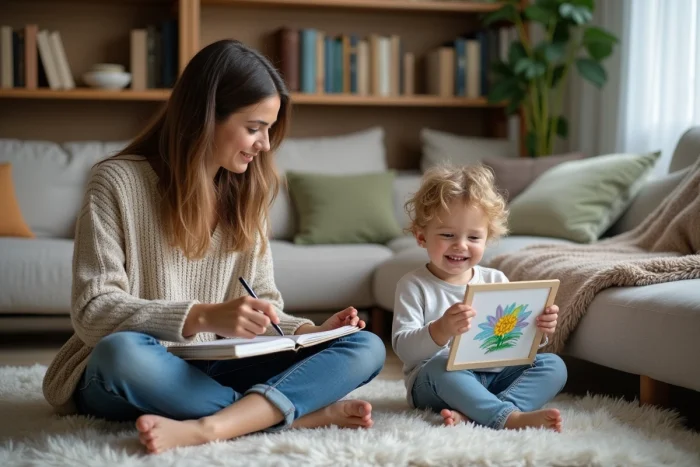
A paradoxical rule prevails: active listening promotes children’s cooperation, but it requires time, often scarce in daily parenting. Sincere encouragement supports self-esteem, yet excessive use of compliments can produce the opposite effect.
Some simple tools, like rephrasing or setting clear boundaries, offer immediate results. However, their effectiveness depends on consistency, an underestimated challenge in the face of fatigue or stress. Specialized resources often remain underutilized even though they provide concrete and accessible solutions.
Positive Parenting: Why Change Your Perspective on Daily Life?
Changing the way you act with your children starts by questioning what seems obvious. Parenting is not limited to reproducing patterns or following rules dictated by others’ views. Opening up to positive parenting means seeking a balance between educational kindness, non-violent communication, and that famous positive discipline that has sparked so much ink. The books by Isabelle Filliozat or Catherine Gueguen remind us that nothing is trivial: every word, every gesture builds a unique bond with the child.
What Catherine Gueguen calls the “loving and understanding gaze” is the ability to welcome emotion, to understand reactions without losing one’s temper or judging too quickly. Neuroscience confirms it: the child’s brain has not completed its maturation; it experiments, sometimes explodes, and does not have the tools of an adult when facing frustration or anger.
Positive discipline by Jane Nelsen offers a structured yet respectful approach. It is no longer about making them bend but about accompanying them, teaching autonomy, trust, and social living. Marshall Rosenberg, with non-violent communication, shows that one can express their needs without crushing the other, and that authority is not incompatible with gentleness.
To learn more about Mister Papa, explore the page dedicated to education and concrete tools to support every step of family life. This journey is not a marked path: positive parenting does not promise ease, but it profoundly transforms the relationship with childhood and family.
What Small Gestures and Attitudes Foster a Calm Atmosphere at Home?
At home, everything hinges on the details. The quality of the parent-child relationship depends on those moments when we take the time to listen, observe, and respond without looking away. Taking a few minutes to show interest in what the child is experiencing, rephrasing what they feel, and asking questions that open the discussion: this is how an active listening is built that reassures and strengthens trust.
The framework, however, does not rhyme with rigidity. Clear rules calmly set, explained, and especially discussed with the child, make daily life more predictable. Involving children in routines, preparing breakfast together, sharing a bedtime story, cements emotional security, even on the most hectic days.
Expressing gratitude and valuing efforts, even modest ones, has a strong impact on children’s self-esteem. It is better to encourage with precision (“You put away your toys by yourself, thank you”) than to accumulate generic compliments. A hug or a smile does not need words to signify attention.
Here are some concrete levers to integrate into family life:
- Encourage autonomy: let the child choose their clothes or assign them a small age-appropriate task, like setting the table.
- Prioritize play and sharing time: building a fort, drawing together, taking a walk in the middle of the week. These moments, even short, nourish the family bond.
- Show your own emotions. By verbalizing your doubts or mistakes, you offer the child a model of authenticity, far from the idea of the infallible parent.
Kindness is also measured in managing storms. Rather than judging or dismissing frustration, welcome the emotion, name it, and open the dialogue. The child grows in a space where respect, boundaries, and encouragement matter much more than punishment or threats.
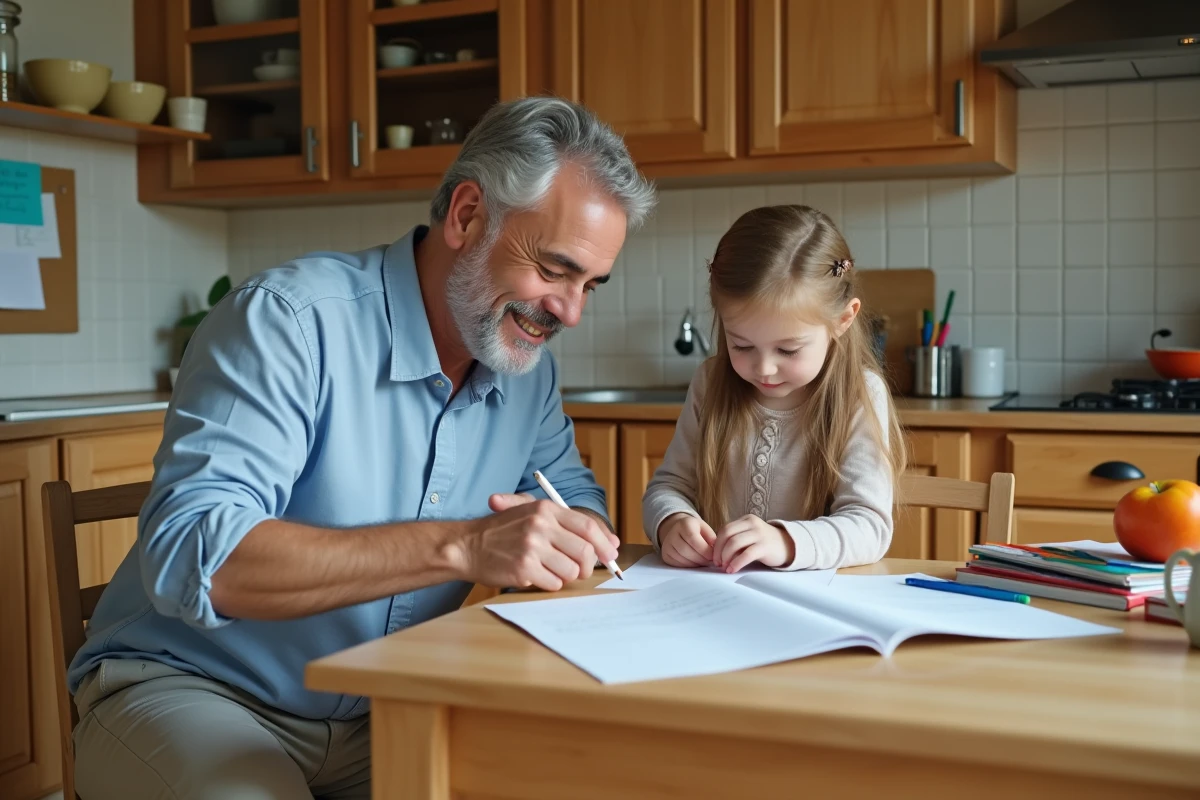
Inspiring Resources to Go Further and Thrive as a Family
Exploring positive parenting involves relying on reliable benchmarks. Books and specialized tools are full of practical advice, often drawn from lived situations and shared experiences. The works of Isabelle Filliozat have become essential: her analyses of the heart of children’s emotions help decode reactions and better support difficult moments. Her “Practical Workbook for Learning to Manage Your Emotions” translates theory into accessible exercises, designed for the realities of daily life.
To enrich practices, several approaches have proven effective:
- Positive discipline conceived by Jane Nelsen combines rules and respect. It encourages self-discipline and develops social skills in children, creating an atmosphere where everyone finds their place.
- Non-violent communication by Marshall Rosenberg provides concrete tools to defuse conflicts and express everyone’s needs without hurting or imposing.
- The books by Catherine Gueguen invite a fresh perspective on educational kindness, through examples and scientific insights into child development.
Practical Tools and Support
Parental coaching and online training offer personalized support. Workshops, webinars, support groups: these formats allow for exchange, progress, and finding tailored responses to each situation. There is no one-size-fits-all method, but resources that respect the uniqueness of each parent and each child, with the common thread of a positive and conscious education.
Nothing is set in stone: each family has its dynamics, challenges, and quiet victories. Positive parenting does not promise perfection, but it opens the door to a more peaceful daily life, where we move forward, step by step, towards greater understanding and complicity.