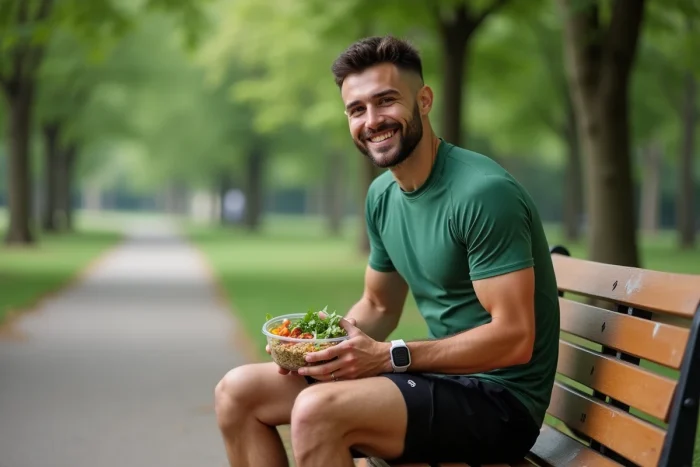
Some elite athletes are achieving record performances without consuming meat. Official protein recommendations, long centered on animal sources, are now being challenged by recent studies conducted on vegetarian athletes.
Sport and Vegetarian Diet: Misconceptions and Nutritional Realities
Vegetarianism in the world of high-level sports is intriguing and sometimes unsettling. However, more and more world-class athletes are demonstrating that there is no inevitability: meat is not a requirement for performance. Relying on a vegetarian diet means betting on variety: eggs, milk, dairy products, as well as the richness of legumes, whole grains, tofu, tempeh, nuts, and seeds. Veganism, on the other hand, goes further by eliminating all animal-derived foods. Veganism also rejects any form of animal exploitation, even in everyday aspects.
Some misconceptions persist: the risk of protein deficiency, difficult recovery, low energy. However, reality contradicts these prejudices. Plant proteins cover most needs, provided that sources are varied. Chickpeas, lentils, quinoa, and soy, when combined with whole grains, allow for the intake of all necessary amino acids. Only vitamin B12 stands out as an exception: absent from the plant kingdom, it requires supplementation for vegans. Iron, found in spinach, lentils, or beans, is better absorbed when paired with vitamin C.
Switching to a predominantly plant-based diet requires serious organization, especially for athletes. Digestive issues, muscle loss, or decreased performance are not inevitable but indicate an imbalance in intake. Relying on reliable vegetarian nutrition advice for athletes, such as those detailed by France Sports, helps prevent deficiencies and optimize every microgram of nutrient. This dietary choice also contributes to the fight against certain chronic diseases and has a concrete impact on the planet.
What Specific Protein Needs Do Vegetarian Athletes Have?
The balance of proteins remains key for any vegetarian athlete. Depending on the discipline, the intensity of training sessions, and individual goals, the amount of protein must be adjusted to support muscle gain, recovery, and energy expenditure, which is often higher than average.
It is generally recommended to reach between 1.2 and 2 grams of protein per kilogram of body weight per day, depending on whether one prioritizes endurance or muscle development. Proteins from legumes, whole grains, soy, tofu, or tempeh do not all offer a complete amino acid profile. To address this, it is advisable to combine grains and legumes during the same meal or throughout the day.
Here are some concrete examples of food combinations that cover all essential amino acids:
- Rice and chickpeas, lentils and quinoa, whole grain bread and hummus: these varied combinations ensure the complementarity of amino acids.
- Some foods like soy, quinoa, or tempeh naturally have a particularly complete protein profile.
It remains necessary to pay attention to certain micronutrients: iron, whose absorption improves with vitamin C; vitamin B12, which must be supplemented in the case of a strict vegan diet; omega-3s, found in flax or chia seeds. To remain performant in the long term, every vegetarian athlete must precisely know their intake, adjust their meals, and monitor any potential deficiencies to combine performance and well-being.
Examples of Meals, Practical Tips, and Testimonials for Performing Without Meat
Vegetarianism has made its place on the podiums, far from the old clichés of fatigue or fragility. There are plenty of examples. Novak Djokovic, to name just one, attributes the length of his career to a plant-based diet. Lewis Hamilton, seven-time Formula 1 world champion, advocates a vegan lifestyle even in the paddocks. Patrik Baboumian, an emblematic figure in strength athletics, proves that power and a meat-free diet can go hand in hand.
Sample Meals for Vegetarian Athletes
Here are some menu ideas suitable for sports practice and a meat-free diet:
- Oatmeal porridge with plant milk, banana, chia seeds, nuts, and dried berries to start the day well.
- Quinoa bowl topped with roasted chickpeas, steamed broccoli, avocado, olive oil, and lemon at noon.
- Red lentil curry, brown rice, fresh spinach, marinated tofu, and fresh fruit for dinner.
Multiplying sources of plant proteins—tofu, tempeh, chickpeas, red beans, quinoa, pumpkin seeds—ensures all needs are met. Regularly combining legumes and whole grains guarantees optimal amino acid intake. For recovery, focus on fibers, fruits rich in antioxidants, and above all, do not forget vitamin B12 supplementation if you are vegan.
Feedback from experiences is telling. Morgan Mitchell, an Olympic sprinter, claims to have never felt a drop in energy since her transition and observes better recovery. Chris Smalling, a defender for AS Roma, notes a significant decrease in injuries. These journeys illustrate a reality: the vegetarian diet, far from limiting potential, offers new perspectives to combine performance, health, and personal convictions.
Things are changing on the fields and on plates. Performance without meat is no longer an exception: it paves the way for a more sustainable and unique sport. Who will be the next to challenge the norms?