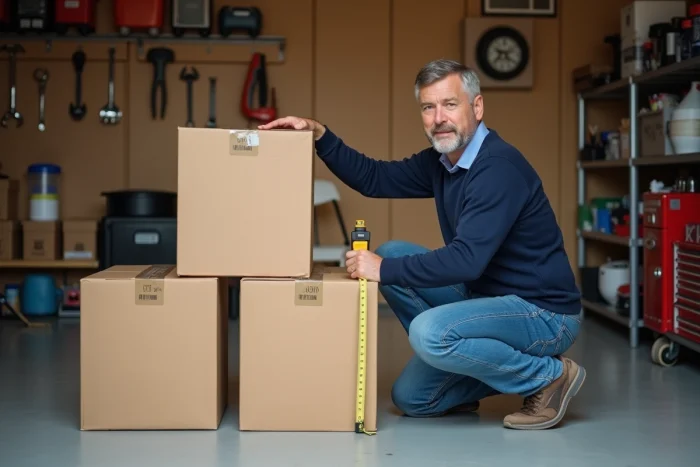
Three cubic meters is the promise of a vast space, but it quickly gets eaten up as soon as real objects are added. In practice, this volume accommodates about 30 medium-sized boxes, not counting the sometimes awkward shapes of furniture or the inevitable gaps that arise between items. We often overestimate our own assessment capacity: a quick glance or a hasty calculation regularly results in discrepancies of 20 to 30%. The result? A truck that’s too small, boxes left on the sidewalk, or a bill that increases at the last minute.
Classic guides often overlook the puzzle of impossible-to-stack items and lost spaces. Yet, these details weigh heavily in the balance. Relying on online calculation tools or a detailed checklist helps limit oversights and anticipate real needs. Knowing how to exploit every nook of a 3 m³ volume requires both method and practical tips. It’s time for rigor, but also for the art of adjustment.
Why accurately estimating a volume of 3 m³ changes everything for your move
The volume in m³ is not just a number: it dictates everything else about the project. It’s impossible to skip a solid estimate. The size of the moving truck, the cost of the move, the rental of a utility vehicle… everything stems from this calculation. Among several quotes, only a precise measurement allows for comparison. The total volume to be moved determines the size of the vehicle: aiming too small means signing up for multiple trips, exhaustion, and a hefty bill.
Estimating correctly is not just for professionals. It only takes simple tools and common sense. Experts recommend adding a margin of 10 to 15% to account for unforeseen circumstances, to avoid underestimation. The moving quote is based on this volume: too high, the moving price rises; too low, and it leads to panic and the search for an additional truck.
To provide a concrete reference, the dimensions of a volume of 3 m³ can hold nearly 30 standard boxes, but each piece of furniture, each object, changes the equation. A rigorous estimate structures the entire move. It’s the foundation for choosing the right truck size, controlling expenses, and rationalizing every cubic meter in the vehicle.
How to accurately calculate the volume needed for your furniture and boxes?
To calculate the volume to be moved, you need to start with the basics: measure the length, width, and height of each large item. The formula is simple: length x width x height (in meters) to obtain the volume of each item. Add them all together, and you have the total volume to transport. This method remains the reference, especially for atypical or large furniture.
For standard boxes, the calculation is quicker. A standard box equals 0.1 m³. So, ten boxes make one cubic meter. A wardrobe box will take 1.5 m³. To leave nothing to chance, make a list room by room: living room, bedroom, kitchen, and add up the volumes. Some items deserve special attention: a two-seater sofa represents nearly 2 m³, a double bed between 2.5 and 4 m³ depending on its size, a fridge from 0.5 to 3.2 m³.
To speed things up, there is another method based on the surface area of the home. By dividing the surface area by 2 or 5, you get an estimate of the volume to be moved. For example: a studio of 20 m² would be about 10 m³; for a three-room apartment, plan for 25 m³. Even though this approach remains approximate, it serves as a starting point before refining with a precise inventory.
For those who want to avoid any hesitation, online volume calculators are the most effective tool. They offer precision appreciated by professionals and allow for quick simulations of different scenarios. If doubts persist, consulting an expert, either on-site or remotely, provides a reliable estimate of the actual volume, limiting unpleasant surprises on the big day.
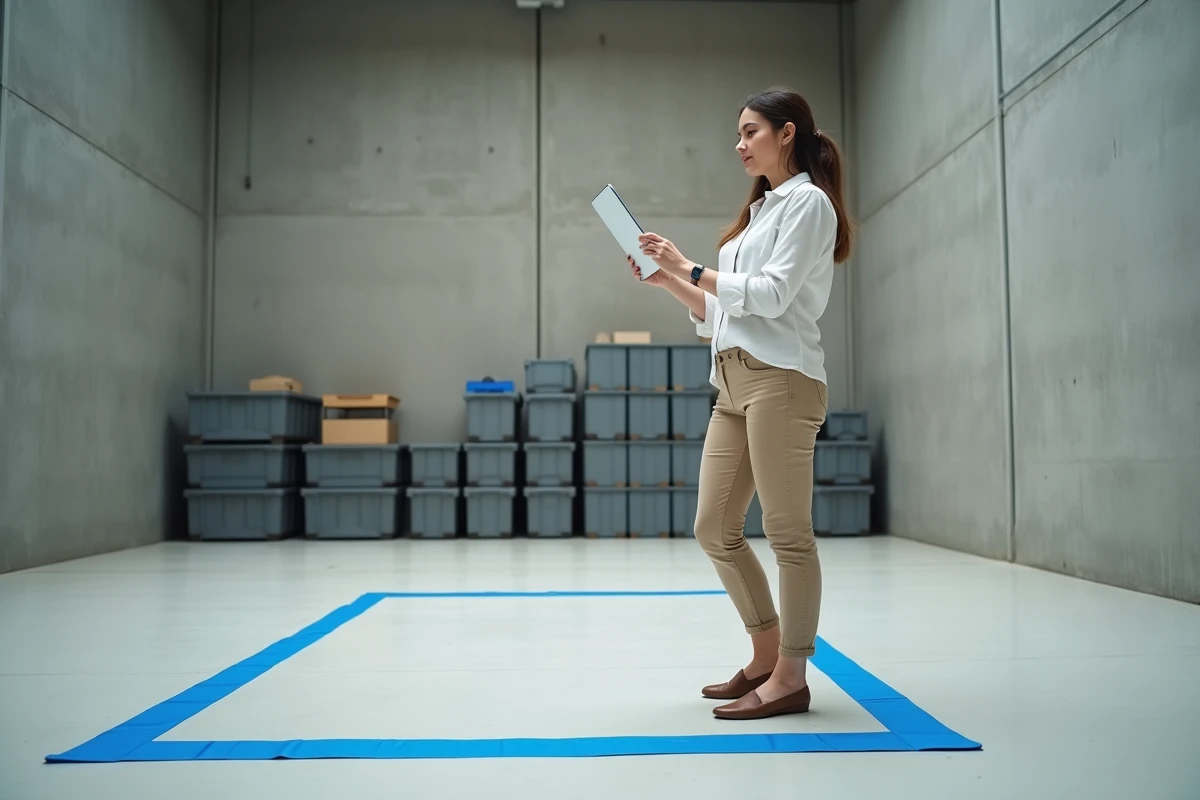
Practical tips and tools to optimize every cubic meter during transport
To make the most of each cubic meter, preparation makes all the difference. Here are the key points to best utilize the available space:
- Use boxes of the same size to simplify stacking and stabilize the load.
- Place the heaviest items (books, dishes) at the bottom and at the front of the moving truck to avoid imbalances.
- Dismantle furniture when possible: remove legs, shelves, handles, and then pack them separately to save space.
A volume calculator will help you anticipate, but always keep a margin of 10 to 15% for unforeseen events. To visualize, a 6 m³ truck can hold up to 60 boxes, perfect for a studio. A surface area of 40 m²? Opt for a 12 m³ truck. For larger homes, go for 20 m³ and plan for around 130 boxes.
The loading order matters: start with bulky furniture (sofa, bed, appliances), then fill the remaining spaces with boxes and soft bags. Fragile items find their place in the gaps, protected from shocks. This organization reduces wasted space.
Finally, some digital tools offer to simulate the loading arrangement. This type of anticipation limits trips during the utility vehicle rental, reduces the cost of the move, and ensures optimal use of volume.
Three cubic meters, well thought out, are often worth much more than their simple measurement. Each box, each piece of furniture finds its place, provided one has been able to plan, calculate, and organize. The success of the transport always hinges on these details, where every centimeter counts and where improvisation has no place.