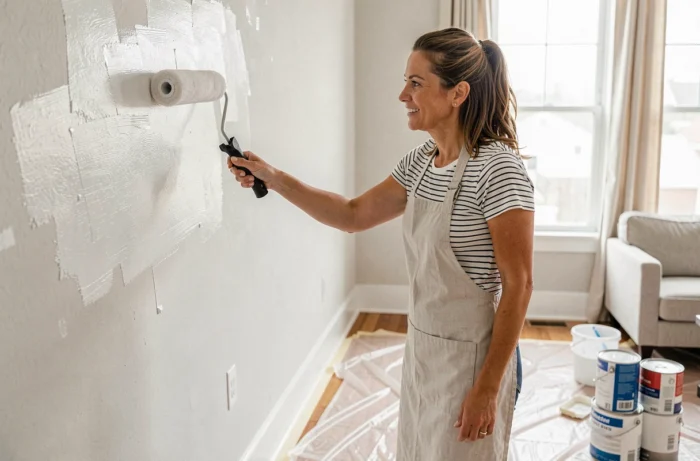
Improving your home doesn’t necessarily require a heavy renovation. A series of targeted interventions focused on lighting, surface materials, and thermal management can transform daily comfort without mobilizing a complete renovation budget. The starting point remains the same: identify the areas that produce an immediately perceptible effect.
Nighttime ventilation and summer comfort: the free lever before renovations
Decor articles talk about blinds and air conditioning. They overlook a crucial factor: how occupants use their home influences comfort as much as the building itself.
A study by ADEME published on September 3, 2026, confirms that exposure, the ability to open windows, and ventilation strategies strongly influence summer comfort. Their effects vary according to the habits of the occupants. A wooden construction, for example, is not less effective in summer than a heavy construction if it is designed bioclimatically and used correctly.
Before considering renovations, three reflexes can improve the thermal comfort of a room:
- Open windows at night to lower indoor temperatures and close them as soon as the outside air warms up in the morning
- Limit solar gains during the day with shutters, outdoor blinds, or reflective films applied to the glazing side
- Turn off unnecessary internal heat sources (oven, dryer, halogen lights) during the hottest hours
These actions cost zero euros and produce a measurable effect on the perceived temperature in each room. To go further in the search for concrete ideas, you can consult the Gasy website for the home, which brings together several improvement suggestions by category.
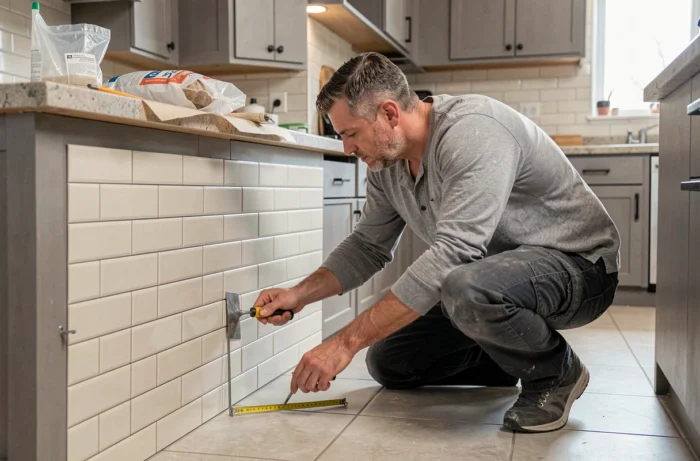
Lighting and ambiance: replacing light sources with layers
Changing the lighting in a room remains one of the interventions with the best effort/result ratio. The principle is based on a simple concept: layered lighting.
Three light layers in each room
The first layer, called functional, covers the general ceiling light. The second, accent lighting, targets a work surface in the kitchen or a reading nook. The third, ambient lighting, creates visual relief through low or indirect sources (table lamp, LED strip behind a piece of furniture).
Layering these three levels adds depth to any space, even small ones. A living room lit only by a central ceiling light appears flat. The same living room with a reading lamp, indirect lighting, and a dimmable ceiling light radically changes the ambiance.
Color temperature: the detail that transforms a bathroom
Color temperature is measured in kelvins. Below 3,000 K, the light leans towards warm yellow, suitable for bedrooms and living rooms. Above 4,000 K, it becomes cool and white, useful for a work surface or bathroom mirror. Mixing color temperatures in the same room creates visual discomfort that is often difficult to identify without paying attention.
Replacing all the bulbs in a room with sources of the same color temperature costs a few euros and immediately standardizes the ambiance.
Surface materials: repainting methodically rather than impulsively
A coat of paint is the most repeated advice in all interior improvement articles. The problem is not the paint itself, but the choice of substrate and finish.
The technical rule to remember: the finish matters as much as the color. A matte paint hides the imperfections of an old wall but marks easily. Satin paint is easier to clean, ideal for kitchens or high-traffic hallways. Glossy paint amplifies natural light in a dark room but reveals every irregularity of the substrate.
Before buying a can of paint, check the condition of the wall. A cracked plaster or poorly removed old wallpaper will yield disappointing results regardless of the chosen color. Sanding, filling, and applying a suitable primer for the substrate (plaster, wood, cement) constitutes three-quarters of the work. The final painting takes less time than the preparation.
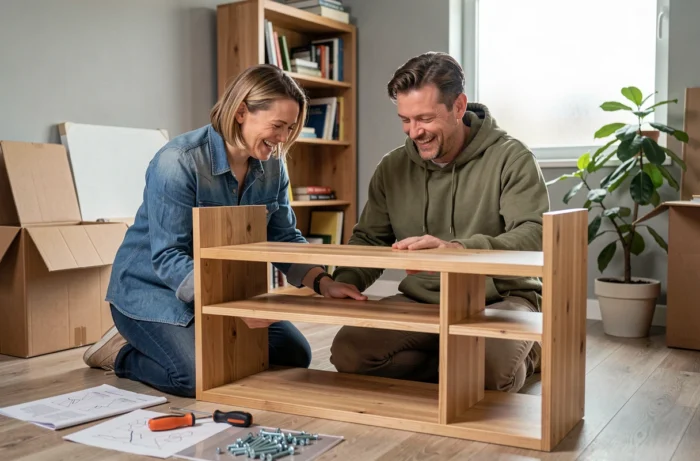
MaPrimeRénov’ and Anah aids: linking small improvements to the support process
Ideas for home improvement are rarely linked to public aid schemes. A publication from Anah dated September 23, 2026, describes the rollout of MaPrimeRénov’ and the implementation of the public service for housing renovation as major developments in public action regarding supported energy renovation.
Specifically, a homeowner considering replacing windows, insulating a wall, or changing a heating system should check their eligibility before starting work. The supported renovation process allows multiple interventions to be grouped into a single file, which increases the amount of aid compared to isolated works.
Even for modest improvements (installing insulating shutters, replacing a hot water tank), going through the France Rénov’ offices or local Anah branches can reveal unknown partial funding.
Space layout: optimizing circulation before furnishing
Adding a piece of furniture to a room is tempting. The opposite reflex, removing a piece of furniture to clear a passage, often produces a clearer effect on comfort.
A smooth flow between usage areas reduces daily fatigue. In the kitchen, the activity triangle between the sink, cooking area, and refrigerator remains the basic reference. If an island or cart blocks one of these paths, the storage gain does not compensate for the inconvenience.
In a living room or compact apartment, testing several configurations before settling on a layout takes little time. Moving a sofa a few centimeters can clear a passage, improve access to natural light, or create a usable workspace.
The most lasting improvements in a home combine a simple technical gesture (lighting, painting, ventilation) with attention to usage habits. Changing the layout of a room or adjusting ventilation reflexes costs nothing, and the effects are felt from day one.