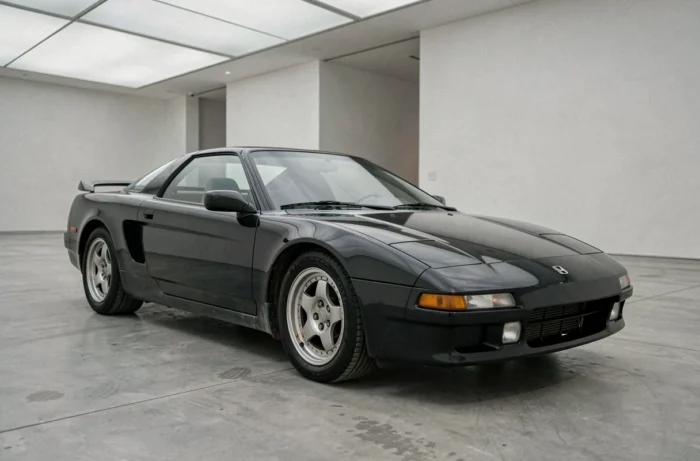
The Honda NSX has traversed two radically distinct industrial eras. The first generation (NA1/NA2, 1990-2005) was based on a naturally aspirated V6 VTEC in a mid-engine position and an aluminum monocoque chassis. The second (NC1, 2016-2022) adopted a hybrid architecture with three electric motors coupled to a twin-turbo V6 and all-wheel drive. Between the two, more than a decade without production, and a complete change in technical philosophy.
Hybrid architecture of the NSX NC1: what the technical sheet doesn’t tell
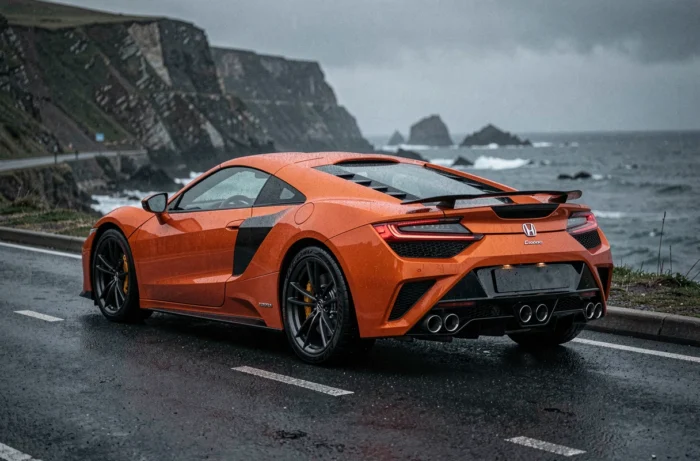
The second-generation NSX is not simply a supercar to which electric motors have been added. The powertrain combines a longitudinal twin-turbo V6 with three independent electric motors: one integrated into the dual-clutch transmission, and two others on the front axle, individually controlled.
This system, called Sport Hybrid SH-AWD, manages torque distribution wheel by wheel at the front. The concrete result: electric torque vectoring that steers the car in corners without mechanical intervention on the brakes. The first NSX, with its double-wishbone suspension and rear differential, required the driver to build their trajectory.
Here we find a detail that mainstream articles overlook: the NC1 radically separates the management of the front axle from that of the rear axle. The front is electrically controlled, while the rear is mechanically controlled via the nine-speed DCT. This duality produces an atypical behavior, sometimes confusing at the limit, which the 2022 Type S has partially corrected with a complete reprogramming of the hybrid system and revised chassis settings.
To examine in detail the new features on La Belle Auto, the technical comparison post by post sheds light on these engineering choices.
Transmission and gearbox: the disappearance of the manual
The modern NSX has never offered a manual gearbox. This marks a clear break from the NA1/NA2, whose most advanced versions featured a six-speed manual transmission. The second generation relies exclusively on a nine-speed DCT, necessary to synchronize thermal and electric torque.
This choice is not trivial. On the first NSX, the manual gearbox contributed to the direct mechanical relationship between the driver and the engine. Shifting gears fueled the driving pleasure as much as efficiency. The NC1’s DCT prioritizes speed of execution and energy management, at the expense of that analog connection.
Impact on driving feel
The NA1 communicated its limits through the chassis and hydraulic power steering. The NC1 filters more, interposing layers of computation between the driver’s intention and the car’s response. The larger turbochargers of the Type S have improved acceleration response, but have not eliminated this electronic mediation.
- NA1/NA2: manual gearbox available (five then six speeds), hydraulic steering, no electronic torque assistance
- Standard NC1: nine-speed DCT, electric torque vectoring, electric power steering
- NC1 Type S (2022): enlarged turbochargers, revised DCT mapping, specific Continental SportContact 6 tires, dedicated aerodynamics
Aluminum chassis NA1 vs. multi-material structure NC1
The aluminum monocoque chassis of the first NSX was a feat for 1990. Honda applied techniques from aeronautics to the series, achieving a notable weight saving compared to the steel structures of the time. The structural rigidity of the NA1 remained remarkable for a car of this mass.
The NC1 adopts a multi-material approach. Aluminum, ultra-high-strength steel, and composites share the body according to local constraints. The complexity of manufacturing has led Honda to assemble the second NSX in a dedicated factory in Marysville (Ohio), rather than in Japan like the first.
Weight and balance
The addition of the hybrid system and all-wheel drive has significantly increased the weight of the NC1 compared to the NA1. This excess weight, concentrated in the lower part due to the positioning of the batteries and electric motors, alters the center of gravity but penalizes pure agility. The first NSX, being lighter, offered a responsiveness in direction changes that the second compensates for with electronics.
Collectible value and market rating
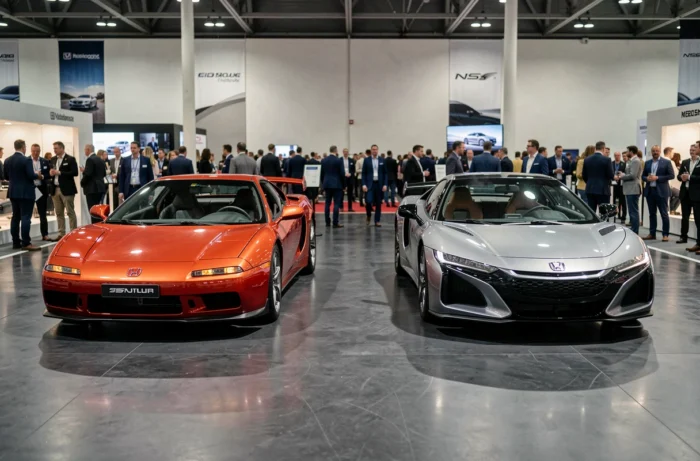
The valuation trajectories of the two generations diverge sharply. The NA1, bolstered by its status as an analog sports car and its Japanese production, sees its value steadily increase. Well-maintained examples, particularly those with a manual gearbox, reach levels that their initial catalog price did not predict.
The standard NC1 has experienced significant depreciation in the used car market. Its launch price positioning, higher than that of established competitors, has not been supported by a brand image equivalent to that of Porsche or Ferrari in this segment. The Type S, produced in limited series, partially escapes this erosion and is beginning to attract collectors.
- NA1/NA2: rising value, manual versions most sought after, relatively accessible mechanical maintenance
- Standard NC1: marked depreciation, complexity of hybrid system maintenance, limited maintenance network
- NC1 Type S: limited production, emerging collectible potential, last iteration of a lineage closed since 2022
The end of production of the NSX in 2022, confirmed by Honda with the Type S model, closes a chapter of nearly three decades. The first generation remains a reference of analog engineering, while the second is an ambitious technological exercise whose legacy will largely depend on the rarity of the Type S and the evolving perception of performance hybrids.