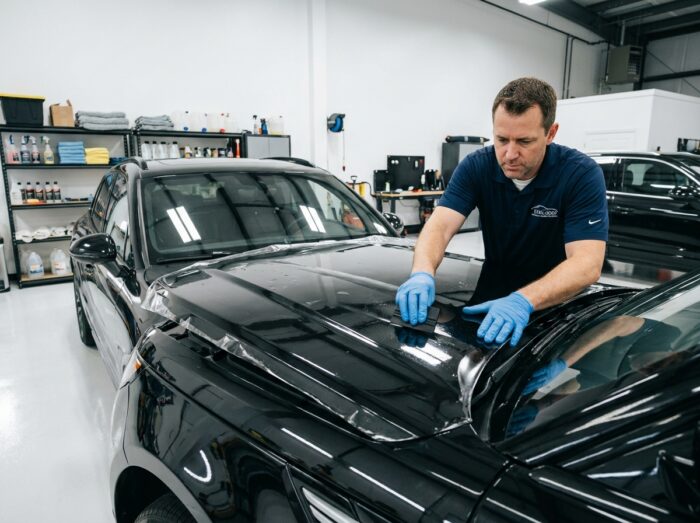
A gravel stone projected on the highway, a low branch in a rural area, acidic droppings left for two days on the hood: we all know these aggressions that washing cannot correct. It reveals them. When the paint is already marked, using a high-pressure jet only makes the defect more visible. This reality on the ground drives some drivers to invest in invisible protections, capable of absorbing shocks before they reach the varnish.
What regular washing does not protect on the bodywork
A wash, even a careful one, acts on surface dirt. It removes dust, winter salt, and insect residues. However, it does not fill in a micro-scratch and does not restore a paint shine caused by a gravel impact.
We also observe an effect that few drivers anticipate: washing itself generates defects. Automatic station rollers create swirl marks on the varnish, especially on dark colors. Poorly rinsed cloths trap abrasive particles that scratch the surface with each pass.
Washing remains a necessary step in car maintenance, but it offers no physical barrier against mechanical aggressions. This is the fundamental difference with a protection applied beforehand: one cleans, the other absorbs.
For drivers who want to preserve the quality of their paint in the long term, applying a paint protection film provides a concrete answer to these limitations.
PPF film and ceramic coating: two automotive protection logics
When we talk about invisible protections for a vehicle, two families of products dominate: the PPF (Paint Protection Film) made of transparent polyurethane, and the ceramic treatment. They do not serve the same purpose.
The PPF film absorbs physical impacts
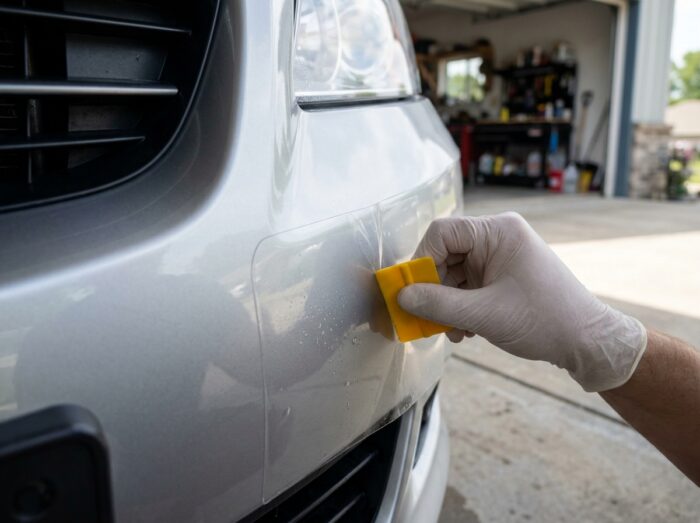
The PPF is a flexible, transparent film applied directly to the bodywork. Its primary function is mechanical: it absorbs gravel projections, branch friction, and door dings in a parking lot. Some films incorporate a self-healing property, where superficial micro-scratches disappear under the effect of heat (sun, hot water).
The PPF protects the original paint against physical damage, which no liquid product can do. It is primarily applied to exposed areas: front bumper, hood, fenders, lower body, mirrors.
The ceramic coating repels chemical contaminants
Ceramic works differently. It is a chemical treatment that creates a hard hydrophobic layer on the varnish. Water beads, droppings slide off, tree resin adheres less. Cleaning becomes quicker and less aggressive for the surface.
However, a ceramic treatment does not stop a gravel stone launched at full speed. It reduces the adhesion of dirt but absorbs no shock. It is a chemical protection, not mechanical.
Why some drivers combine both
The complementarity of PPF and ceramic responds to a structural rather than cosmetic logic. The film takes the hits, while the ceramic applied on top facilitates maintenance and enhances shine. This results in a vehicle that withstands road aggressions while remaining easier to wash.
Simplified ceramic protections: the game-changing trend
The detailing market is evolving towards ceramic products accessible to individuals. It is no longer reserved for professionals equipped with a installation booth.
- Ceramic spray coatings are applied by spraying and wiping, without complex prior polishing. They offer hydrophobic protection lasting six to twelve months depending on usage conditions.
- Spray-on / rinse-off products are sprayed on wet bodywork and then rinsed off. The hydrophobic effect lasts one to three months, with an application taking just a few minutes.
- Consumer ceramic kits now include preparation wipes and pre-cut applicators, reducing the risk of error during application.
This simplification explains why inexperienced drivers in detailing are adopting these protections. The cost remains moderate compared to a professional treatment, and the application requires neither a garage nor special skills.
Resale value and insurance: the calculation behind invisible protection
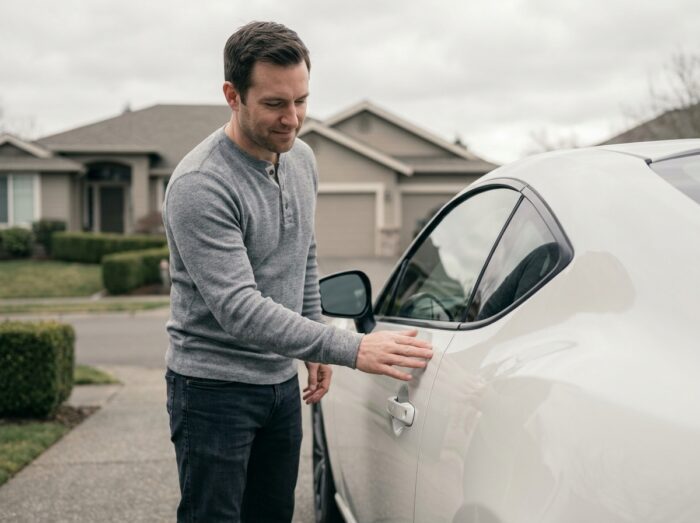
Beyond visual comfort, protecting a vehicle’s paint has a direct impact on its resale value. A bodywork without dings or micro-scratches reassures the buyer and limits downward negotiation arguments.
In the premium market and high-end vehicles, the condition of the paint weighs heavily in the estimation. A hood pitted by gravel or a bumper marked by emerging rust lowers the value, sometimes significantly. Protecting the paint means protecting the vehicle’s resale value.
Regarding auto insurance, invisible protections generally do not modify the contract. Feedback on this point varies among insurers, but most consider PPF as a non-declarable accessory. The interest remains primarily patrimonial: fewer touch-ups, less restoration costs before transfer.
Solar films and interior comfort: invisible protection inside the cabin
Invisible protections are not limited to the bodywork. Clear solar films, applied to side windows and the rear window, filter some UV and infrared rays without altering the vehicle’s appearance.
- Reduction of heat inside the cabin, which decreases the demand on the air conditioning and improves interior comfort.
- Protection of plastics, leathers, and fabrics against fading due to prolonged UV exposure.
- Maintaining transparency compliant with regulations, as clear films respect the light transmission threshold imposed on the windshield and front windows.
This type of protection acts on the durability of the vehicle’s interior, a parameter that exterior washing obviously does not cover.
The choice between regular washing and invisible protection is not binary. Washing remains necessary for surface hygiene. But invisible protections address a problem that washing does not solve: the mechanical and chemical wear of the paint, varnish, and cabin. It is an upfront investment that reduces downstream maintenance costs and preserves the vehicle’s appearance far beyond what a car shampoo can offer.